B2B Purchase Intent Signals: The Key to Unlocking Sales Growth
In today's fast-paced B2B landscape, sales teams are constantly looking for ways to identify and engage with high-value prospects. One of the most effective ways to do this is by leveraging B2B purchase intent signals. But what are these signals, and how can they be used to drive sales growth?
What are B2B Purchase Intent Signals?
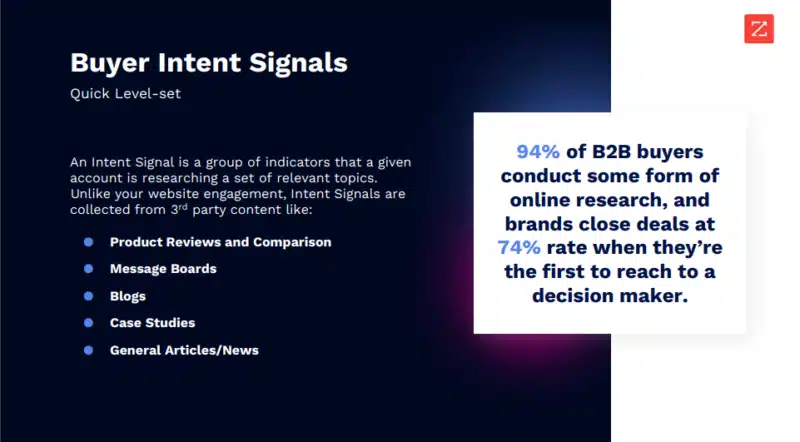
B2B purchase intent signals are behavioral information drawn from web activity, content consumption, search patterns, and third-party publisher networks. These signals indicate a target account's likelihood to make a purchasing decision in a given category within a defined time window. By analyzing these signals, sales teams can identify high-value prospects and tailor their outreach efforts to resonate with their needs.
The Importance of B2B Purchase Intent Signals
Traditional sales and marketing methods often rely on generic lead lists and random outreach efforts. However, these approaches can be inefficient and ineffective in today's competitive B2B landscape. B2B purchase intent signals, on the other hand, offer a more targeted and data-driven approach to sales and marketing.
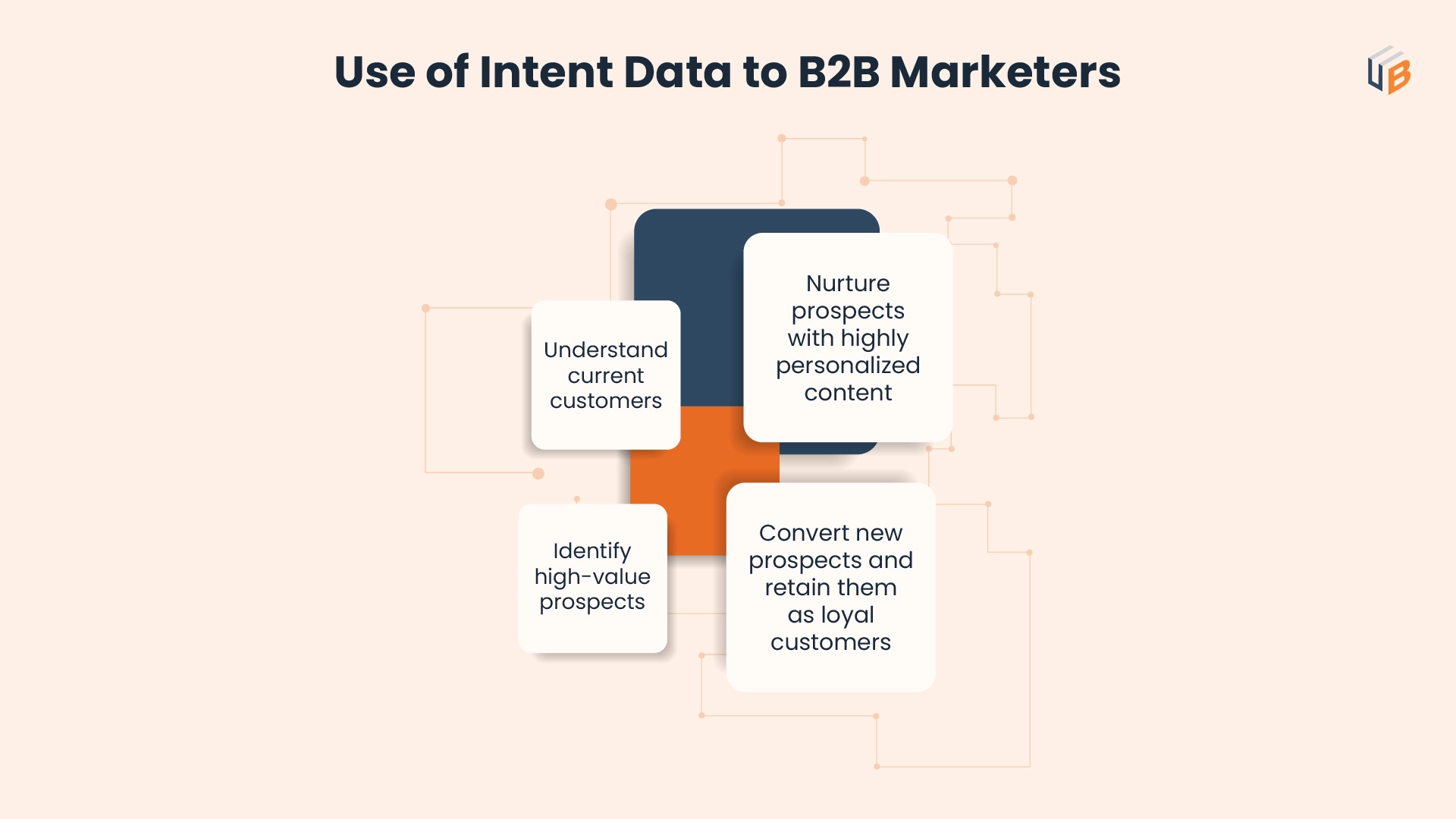
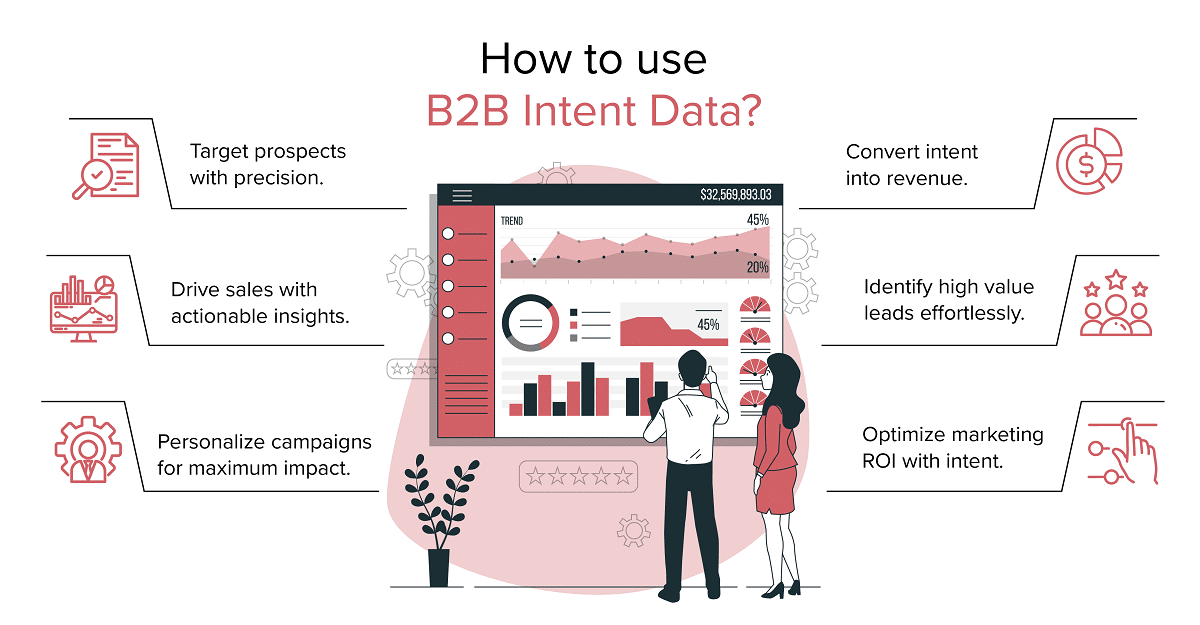
- Improved Lead Quality: By identifying high-value prospects based on their purchase intent signals, sales teams can focus on qualified leads that are more likely to convert.
- Enhanced Personalization: By analyzing purchase intent signals, sales teams can tailor their outreach efforts to resonate with the needs and pain points of their target audience.
- Increased Conversion Rates: By engaging with prospects who are actively considering a purchase, sales teams can increase the likelihood of closing deals and driving revenue growth.
Types of B2B Purchase Intent Signals

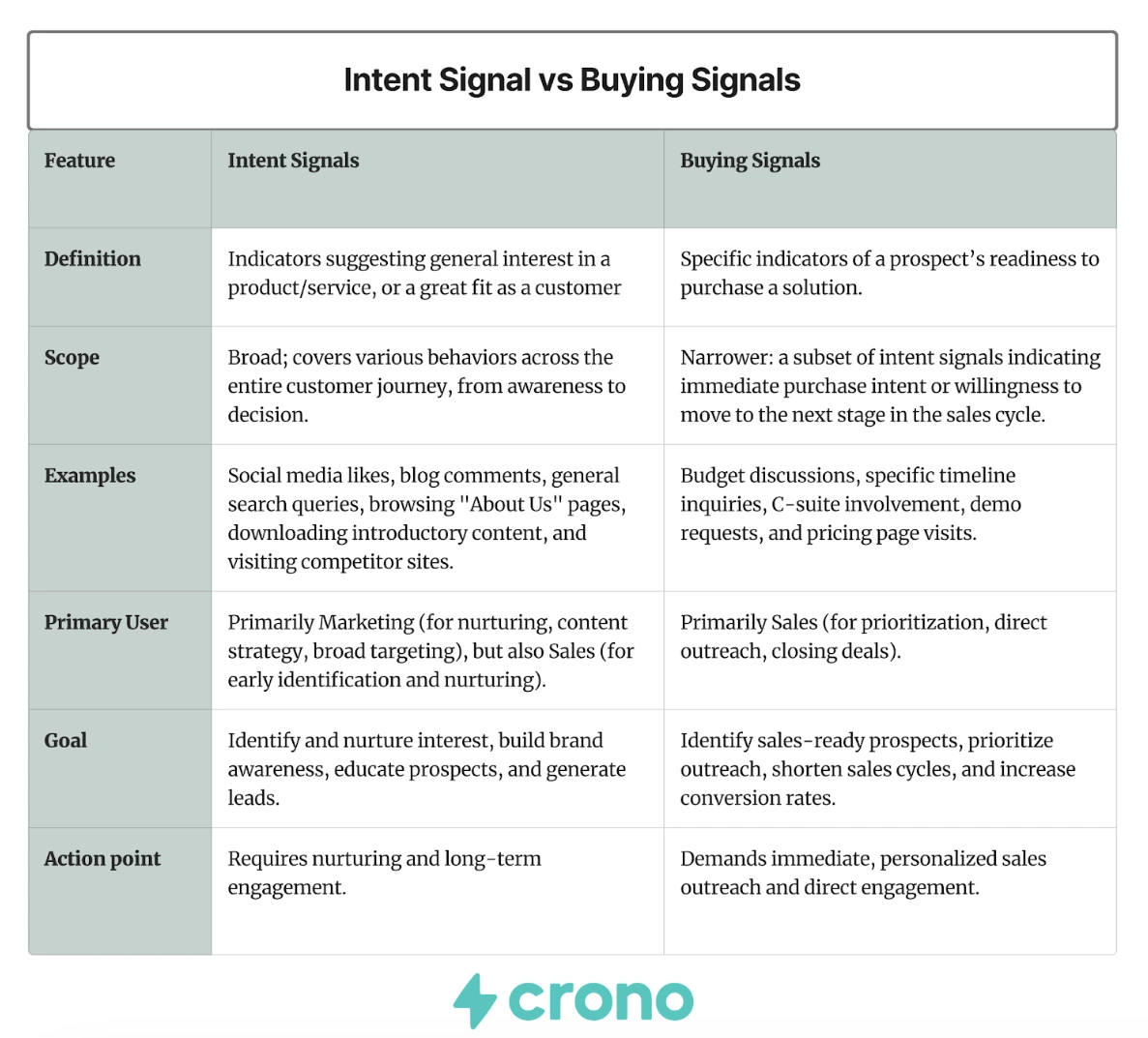
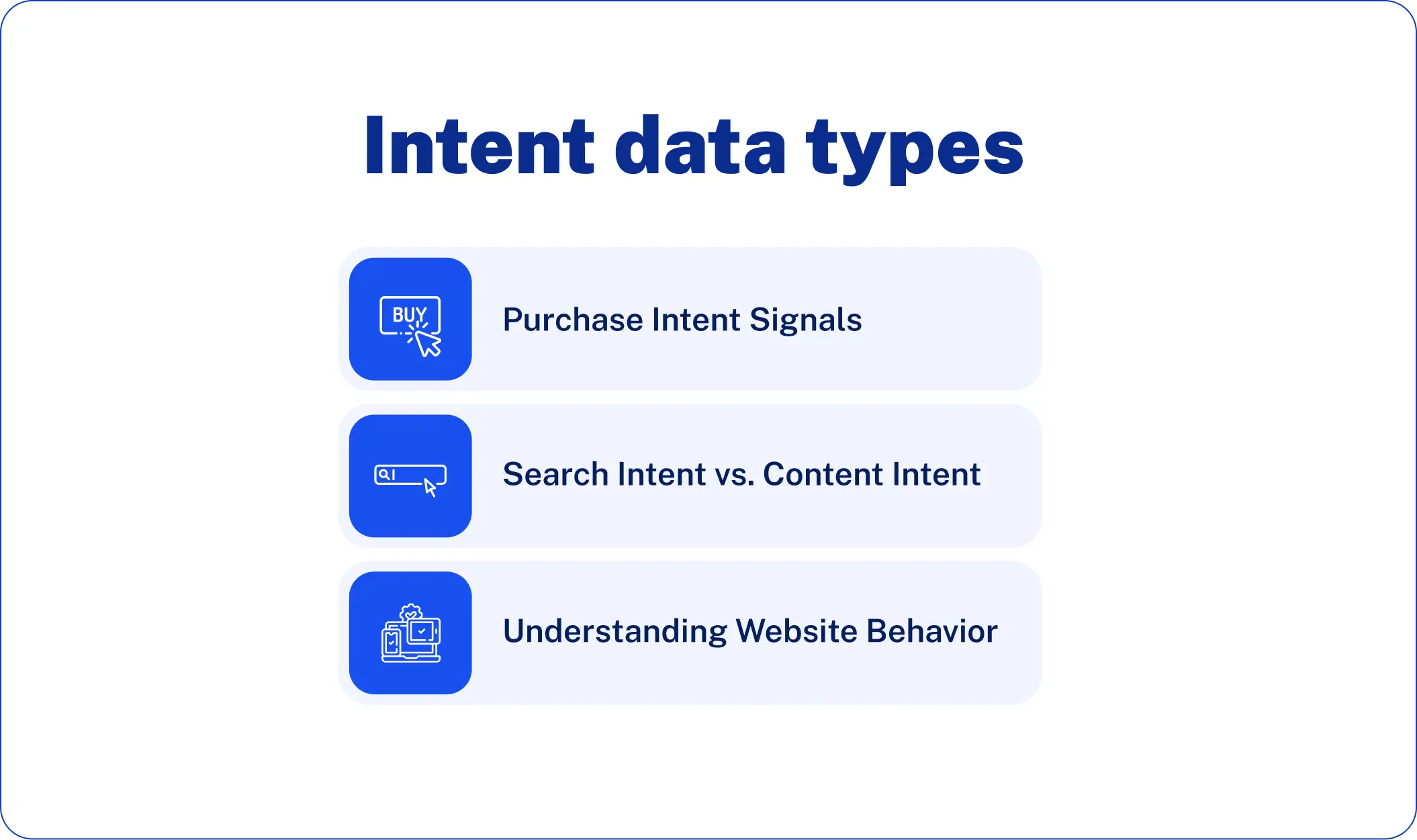
B2B purchase intent signals can be categorized into three main types: first-party, third-party, and contextual signals.
- First-Party Signals: These signals are collected directly from the target account's website, email interactions, and other first-party data sources.
- Third-Party Signals: These signals are collected from external sources, such as publisher networks, review platforms, and technology data providers.
- Contextual Signals: These signals are collected based on the context in which the target account is interacting with your brand, such as page views, clicks, and engagement metrics.
Acting on B2B Purchase Intent Signals
Identifying B2B purchase intent signals is just the first step. The next step is to act on these signals by tailoring your outreach efforts to resonate with the needs of your target audience.
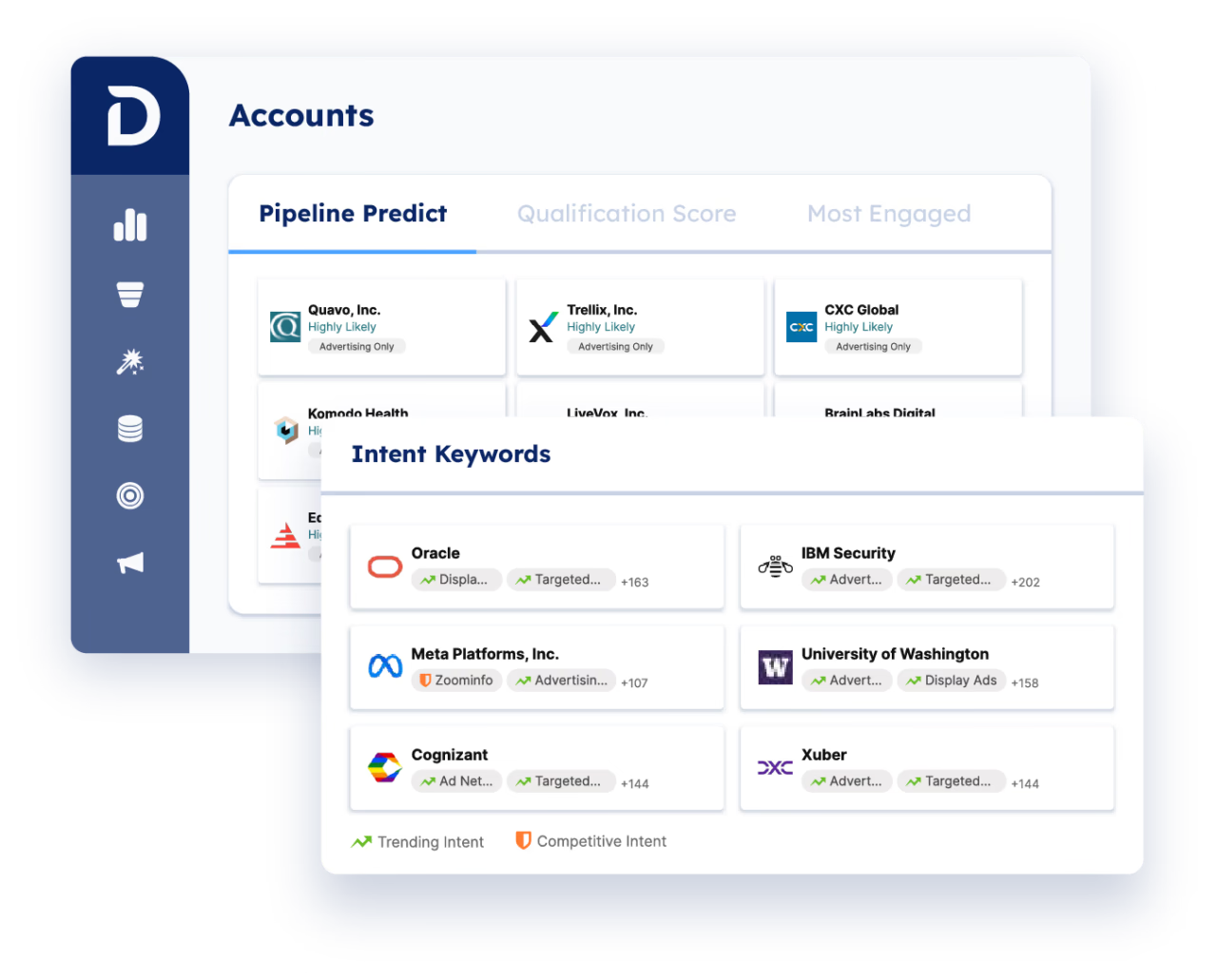
- Develop a Scoring Model: Create a scoring model that assigns weights to different purchase intent signals based on their relevance and importance.
- Personalize Outreach Efforts: Use the insights gained from B2B purchase intent signals to personalize your outreach efforts, including email campaigns, social media engagement, and phone calls.
- Focus on High-Value Prospects: Prioritize high-value prospects based on their purchase intent signals and allocate resources accordingly.
Conclusion
B2B purchase intent signals are a powerful tool for sales teams looking to drive growth and revenue. By leveraging these signals, sales teams can identify high-value prospects, personalize outreach efforts, and increase conversion rates. Whether you're just starting out or looking to refine your sales strategy, B2B purchase intent signals can help you stay ahead of the competition and drive success in today's fast-paced B2B landscape.