Freelance Independent Contractor Contract: A Comprehensive Guide
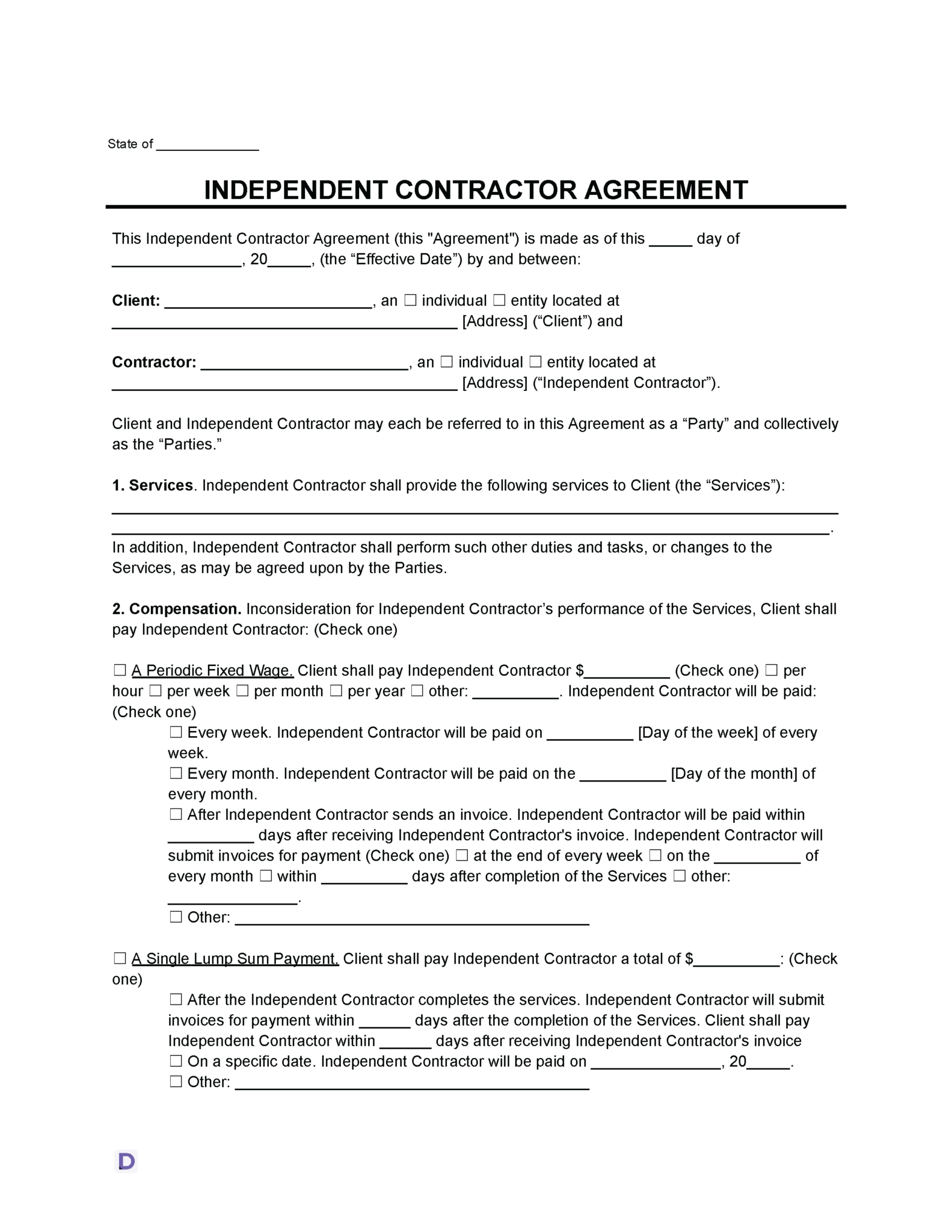
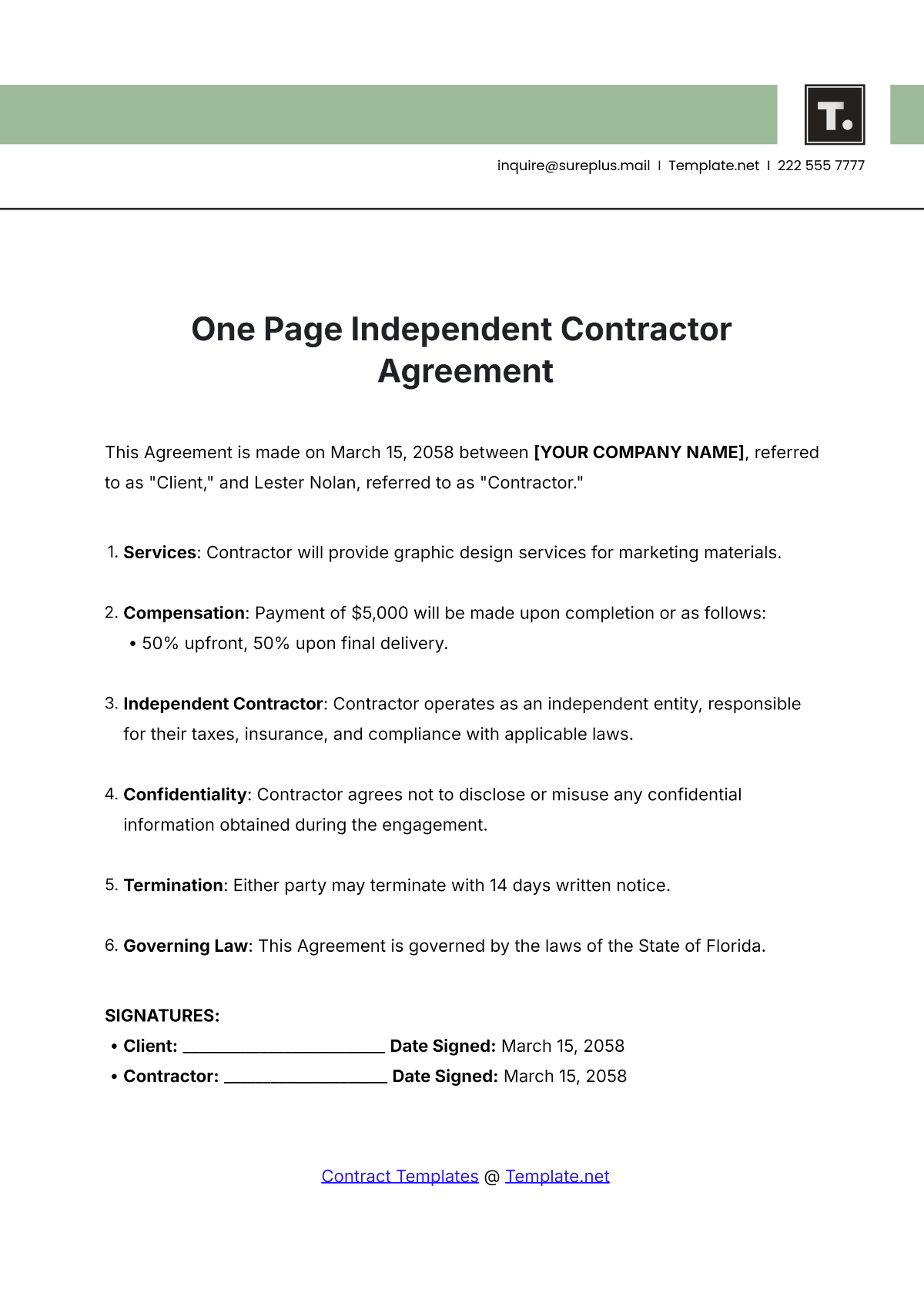
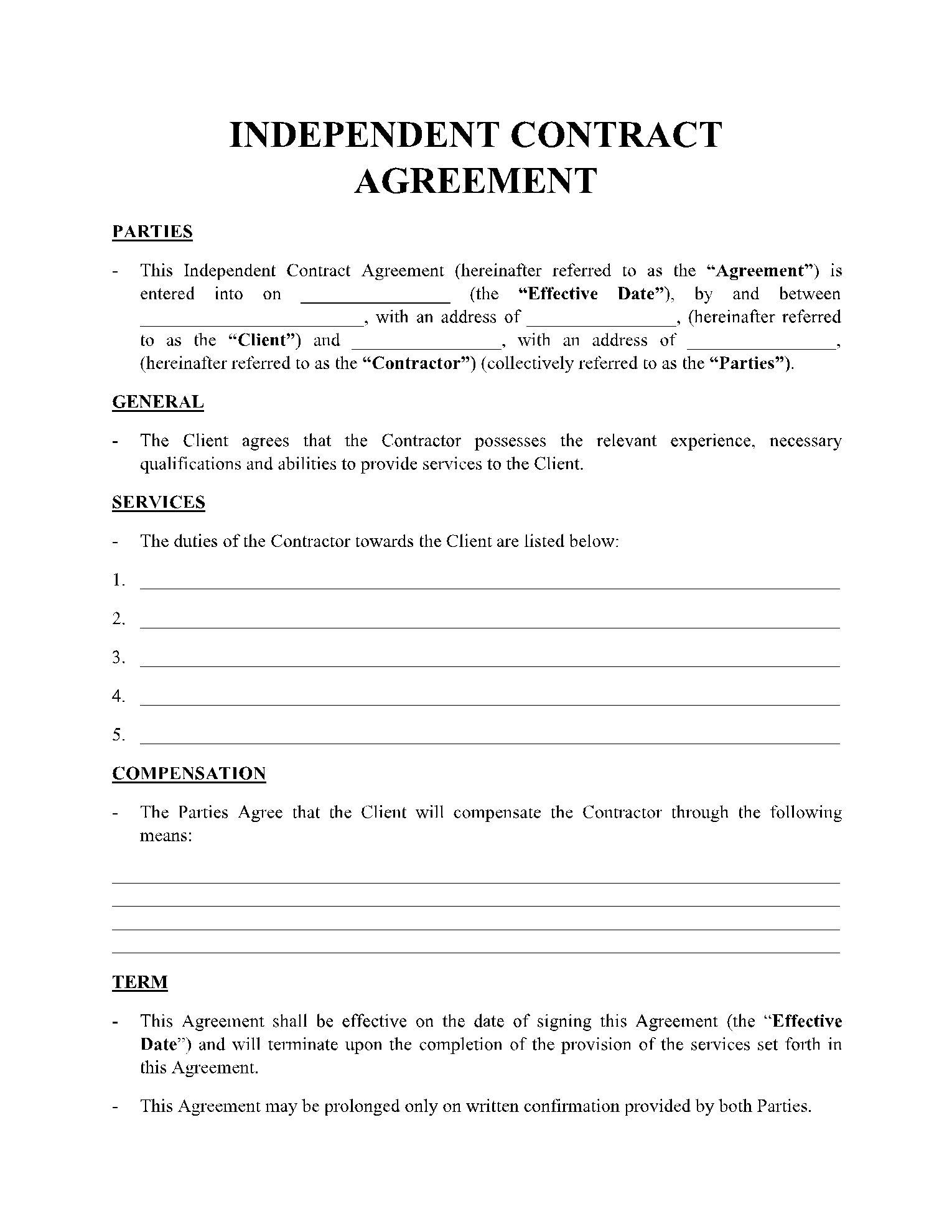
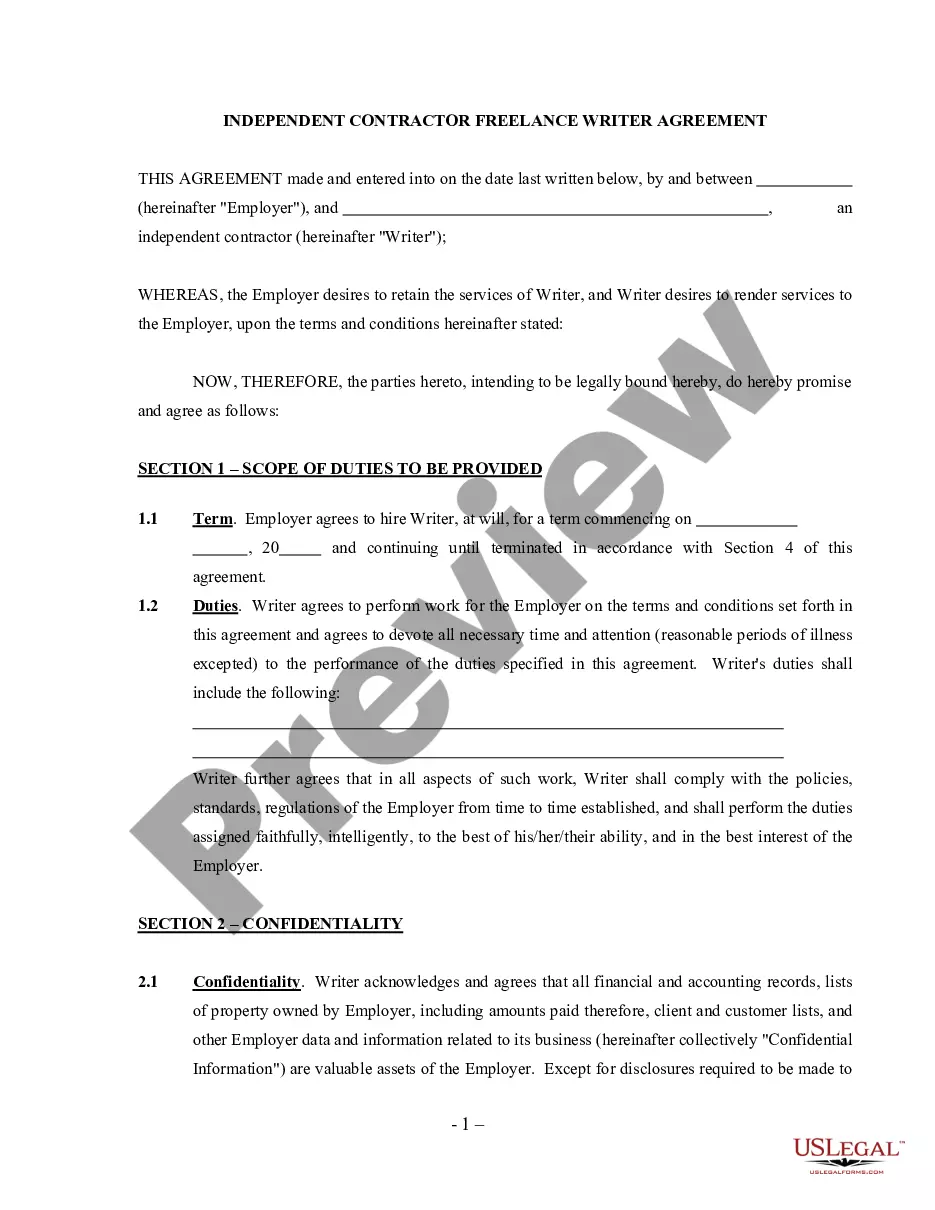
A well-crafted freelance independent contractor contract is essential for any business or individual seeking to hire a freelancer or contract worker. This type of agreement establishes a professional relationship between the client and the freelancer, outlining the scope of work, payment terms, deadlines, and other important details to ensure both parties are protected.
What is a Freelance Independent Contractor Contract?
A freelance independent contractor contract is a written agreement between a client and a freelancer or self-employed professional. It defines the working relationship, clarifies expectations, and outlines the terms and conditions of the collaboration. In essence, this document recognizes the freelancer as an independent contractor and not an employee, which is crucial for tax purposes, liability, and other legal considerations.
Key Components of a Freelance Independent Contractor Contract
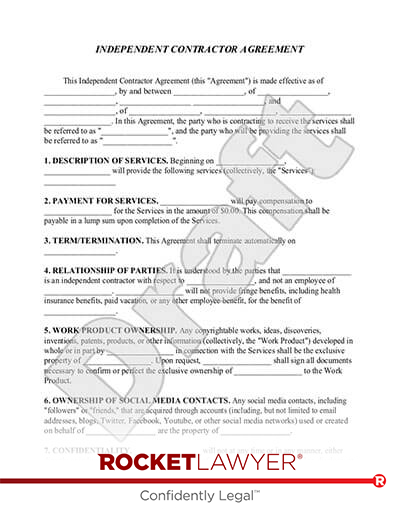
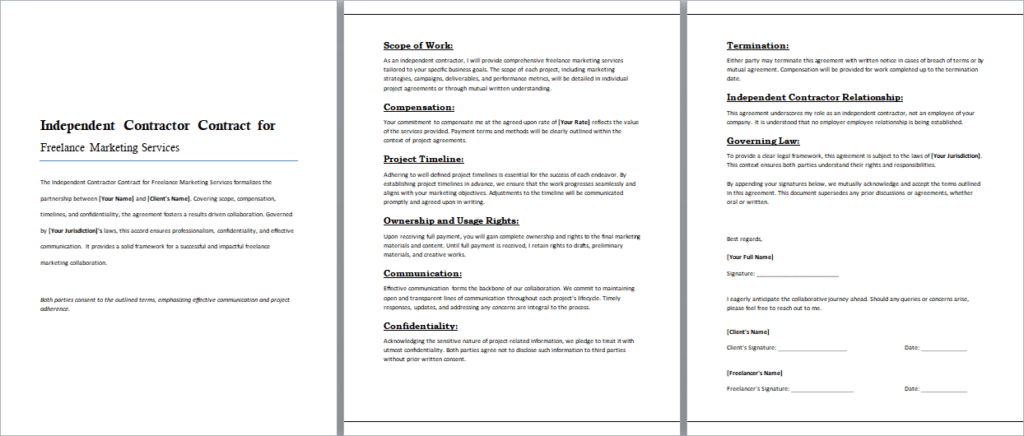
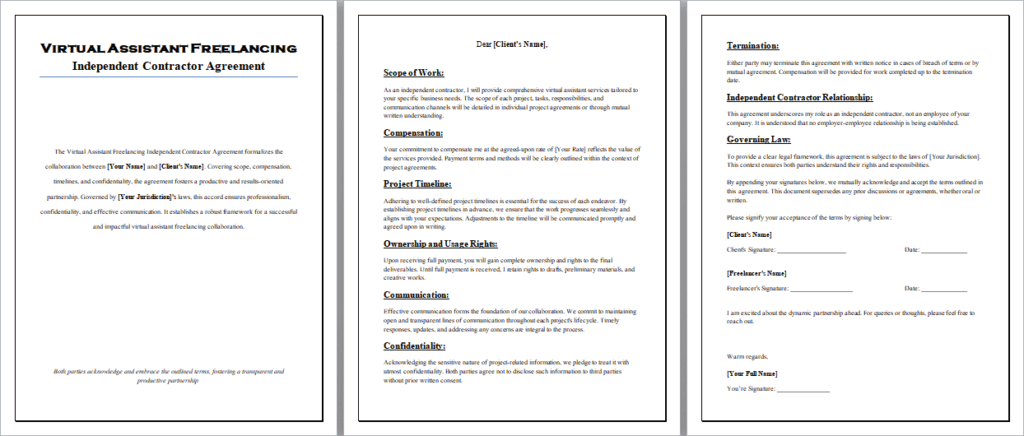
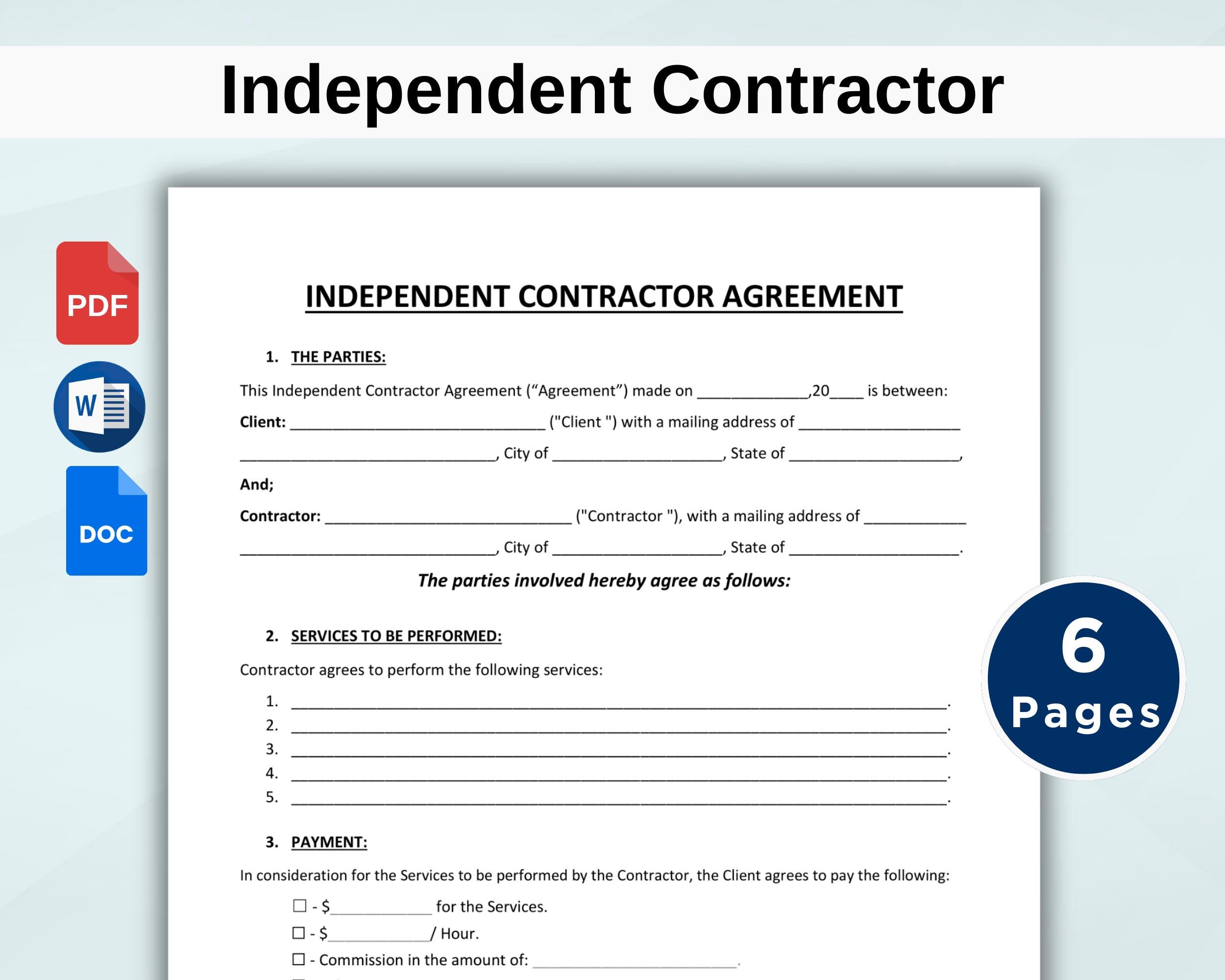
- Scope of Work: A clear description of the services to be provided, including the tasks, deliverables, and deadlines.
- Payment Terms: The amount, frequency, and method of payment, as well as any applicable taxes or fees.
- Duration: The start and end dates of the agreement, including any provisions for renewal or termination.
- Intellectual Property: Ownership and usage rights for any work created, including copyrights, trademarks, and patents. li>Confidentiality: Agreements to keep confidential information, trade secrets, and proprietary materials.
- Dispute Resolution: Procedures for resolving conflicts, disputes, or misunderstandings.
- Termination: Grounds and procedures for terminating the agreement, including any notice requirements.
Why Create a Freelance Independent Contractor Contract?
A well-written freelance independent contractor contract provides numerous benefits for both clients and freelancers. It:
- Clears up expectations and responsibilities, reducing misunderstandings and disputes.
- Establishes a mutually beneficial working relationship, promoting trust and cooperation.
- Protects intellectual property and confidential information.
- Ensures compliance with tax laws, regulations, and other legal requirements.
- Provides a clear plan for termination or renewal, reducing risk and uncertainty.
Best Practices for Creating a Freelance Independent Contractor Contract
When crafting a freelance independent contractor contract, it's essential to follow best practices:
- Use clear and concise language, avoiding jargon or technical terms.
- Include all necessary components and terms related to the scope of work, payment, and duration. li>Consult with a lawyer or use a reputable template to ensure accuracy and enforceability.
- Specify the parties' rights and obligations, including their roles, responsibilities, and duties.
- Consider including a provision for dispute resolution or arbitration.
- Review and revise the contract regularly to ensure it remains up-to-date and relevant.
Conclusion
A freelance independent contractor contract is a vital tool for businesses and individuals seeking to collaborate with freelancers or contract workers. By understanding its key components, benefits, and best practices, you can create a comprehensive agreement that safeguards both parties' interests and promotes a successful working relationship.
Remember to use a clear and concise template, consult with experts if needed, and regularly review and revise your contract to ensure it remains effective and enforceable. With a well-crafted freelance independent contractor contract, you'll be able to achieve your goals with confidence and peace of mind.